
15 Tax Facts That Will Blow Your Mind in 2025-2026
100% bonus depreciation is now permanent. The 1099-K threshold is back to $20,000. Tips and overtime are tax-free. Canada's lowest rate dropped to 14%. Discover 15 game-changing tax facts for US and Canadian business owners in 2025-2026.
15 Tax Facts That Will Blow Your Mind in 2025-2026
Your guide to the biggest accounting and tax changes in the US and Canada
Whether you're a business owner in Texas, an accountant in Toronto, or a freelancer anywhere in between, the tax landscape has shifted dramatically. The US passed its largest tax overhaul since 2017, while Canada quietly implemented game-changing updates. Here are 15 surprising facts you probably didn't know—and how they could save you thousands.
🇺🇸 United States: The OBBBA Revolution
#1 — Did you know... 100% bonus depreciation is now PERMANENT?
For years, businesses watched bonus depreciation slowly phase out—it dropped to 80% in 2023, then 60% in 2024. Many expected it to disappear entirely.
Plot twist: The One Big Beautiful Bill Act (OBBBA) not only restored it to 100%—it made it a permanent feature of the tax code. That $50,000 piece of equipment? Deduct it all in year one. Forever.
Why it matters: This is arguably the most valuable tax benefit for small businesses. It supercharges cash flow and makes capital investments dramatically more attractive.
#2 — Did you know... R&D expenses are instantly deductible again?
Since 2022, US businesses had to amortize research and development costs over 5 years—a painful change that hurt innovation-driven companies.
The reversal: Starting with expenses incurred after December 30, 2024, you can now deduct R&D costs immediately. Even better? Certain small businesses can apply this retroactively to 2022, 2023, and 2024 by amending their returns.
Pro tip: If you filed taxes with amortized R&D expenses, talk to your accountant about potential refunds.
#3 — Did you know... the 1099-K threshold went BACK to $20,000?
Remember the panic about the $600 reporting threshold for PayPal, Venmo, and eBay sellers? The IRS kept delaying it, creating years of confusion.
It's over: The OBBBA officially restored the original $20,000 threshold (and 200+ transactions). Casual sellers on eBay and Etsy can breathe again—no more surprise 1099-K forms for selling your old furniture.
Important: You still owe taxes on your income. This just eliminates the paperwork burden for small-scale sellers.
#4 — Did you know... there's NO TAX on tips (up to $25,000)?
From 2025 through 2028, workers in tipped occupations—waiters, bartenders, valets, hairdressers—can deduct up to $25,000 of tip income from their taxable income.
The scope: The IRS recently announced 68 job categories qualify for this deduction. And for this filing season, they're taking a "relaxed approach" to determining what counts as tipped income.
Reality check: This is temporary (expires after 2028), so enjoy it while it lasts.
#5 — Did you know... overtime pay is now tax-deductible too?
Also from 2025-2028, eligible workers can deduct overtime pay from their taxable income. The deduction phases out for individuals earning over $150,000 (or $300,000 for married couples filing jointly).
Combined impact: A tipped worker earning overtime could see massive tax savings for the next few years.
#6 — Did you know... the SALT cap jumped from $10,000 to $40,000?
For years, the $10,000 cap on state and local tax (SALT) deductions punished taxpayers in high-tax states like California, New York, and New Jersey.
The new deal: Starting in 2025, you can deduct up to $40,000 in state and local taxes (adjusted for inflation through 2029). This is huge for homeowners paying significant property taxes.
#7 — Did you know... there's a new car loan interest deduction?
Here's a new one: you can deduct up to $10,000 in interest payments on qualifying vehicle loans, as long as your modified adjusted gross income is under $100,000 ($200,000 for joint filers).
Fine print: The deduction phases out above these thresholds. Given that the average new car buyer has a six-figure income, this benefit is targeted at middle-income households.
#8 — Did you know... the childcare tax credit for employers QUADRUPLED?
The employer-provided childcare tax credit was capped at $150,000. Starting in 2026, it jumps to $500,000—and to $600,000 for eligible small businesses.
What qualifies: 40% of eligible childcare costs (up from 25%), plus 10% of resource and referral expenses.
For business owners: If you've been thinking about offering childcare benefits, 2026 is the year to do it.
#9 — Did you know... the government will give your newborn $1,000?
The OBBBA created "Trump Accounts"—a new type of IRA for children. For every eligible child born between January 1, 2025, and December 31, 2028, the US government will deposit $1,000 into the account.
The catch: Parents can contribute up to $5,000 more annually. The funds become accessible when the child becomes an adult.
How to set it up: File Form 4547 with your 2025 tax return.
#10 — Did you know... the QBI deduction is now PERMANENT?
The 20% Qualified Business Income deduction for pass-through entities (LLCs, S-Corps, partnerships, sole proprietors) was set to expire at the end of 2025.
Good news: It's now a permanent part of the tax code. Plus, starting in 2026:
- Phase-out thresholds are higher (around $278,000 for single filers, $556,000 for joint)
- Anyone with at least $1,000 of QBI gets a minimum $400 deduction, even if fully phased out
🇨🇦 Canada: Quiet but Significant Changes
#11 — Did you know... the CRA stopped mailing tax packages?
For the 2025 tax year (filed in 2026), the Canada Revenue Agency will no longer proactively mail paper income tax packages. In 2025, 93% of returns were filed online—so they're going all-in on digital.
If you need paper: You can still request a package or download it from canada.ca, but it won't arrive automatically anymore.
The nudge: CRA is pushing SimpleFile, a simplified filing service for eligible low-income Canadians with straightforward tax situations.
#12 — Did you know... the lowest federal tax rate dropped to 14%?
Canada's lowest marginal income tax rate decreased from 15% to 14%, effective July 1, 2025 (blended rate of 14.5% for 2025, full 14% in 2026).
The impact: On the first ~$57,375 of taxable income, everyone pays 1% less in federal tax. It's not dramatic, but it adds up—especially for dual-income households.
Basic Personal Amount: Also increased to $16,452 in 2026, meaning more income is completely tax-free.
#13 — Did you know... the capital gains hike was CANCELLED?
The 2024 federal budget proposed increasing the capital gains inclusion rate from 50% to 66.7% for gains over $250,000. Investors and business owners panicked.
What happened: In January 2025, Finance Canada announced the increase was being deferred to 2026. Then, after the election, the new government scrapped it entirely.
Current status: The inclusion rate remains at 50%. If you were holding off on selling investments or business assets, you're in the clear—for now.
#14 — Did you know... the Underused Housing Tax is GONE?
The UHT required non-resident owners (and some Canadian entities) to file annual returns on vacant or underused residential property, with potential taxes of 1% of the property's value.
Eliminated: As of calendar year 2025, no UHT is payable and no returns are required. One less compliance headache.
#15 — Did you know... Quebec created a powerful new R&D credit?
Quebec introduced the new Research, Innovation and Commercialization Credit (CRIC) with refundable rates of 20-30%, replacing existing R&D credits for fiscal periods beginning after March 25, 2025.
For tech companies: If you're doing R&D in Quebec, this could significantly impact your tax planning. Combined with federal SR&ED credits, the incentives are substantial.
Key Deadlines to Remember
United States (2026 Filing Season)
| Deadline | What's Due |
|---|---|
| January 15, 2026 | Q4 2025 estimated taxes |
| January 31, 2026 | W-2s and 1099s to recipients |
| April 15, 2026 | Individual returns (or extension request) |
| April 15, 2026 | C-Corp returns (calendar year) |
| March 15, 2026 | S-Corp and Partnership returns |
Canada (2026 Filing Season)
| Deadline | What's Due |
|---|---|
| February 24, 2026 | CRA opens electronic filing |
| February 28, 2026 | T4, T5 slips to employees/recipients |
| April 30, 2026 | Individual returns + payment due |
| June 15, 2026 | Self-employed filing deadline |
| June 30, 2026 | Corporate returns (calendar year-end) |
The Bottom Line
2025-2026 represents a seismic shift in North American tax policy. For US business owners, the OBBBA delivers massive, permanent benefits—100% bonus depreciation, immediate R&D expensing, and a permanent QBI deduction. For Canadians, the changes are more modest but still meaningful: lower rates, higher exemptions, and simplified compliance.
The common thread? Automation is no longer optional. With more complex rules, shorter deadlines, and mandatory electronic filing, businesses that still rely on spreadsheets and paper receipts will struggle to keep up.
This article was prepared by the Pinnokio team for informational purposes only. Tax laws change frequently—always consult a qualified tax professional for advice specific to your situation.
Pinnokio Team
Pinnokio Team
Related posts

Understanding AI's Role in Modern Accounting
Artificial Intelligence is no longer a futuristic concept... Discover how AI is revolutionizing accounting tasks...
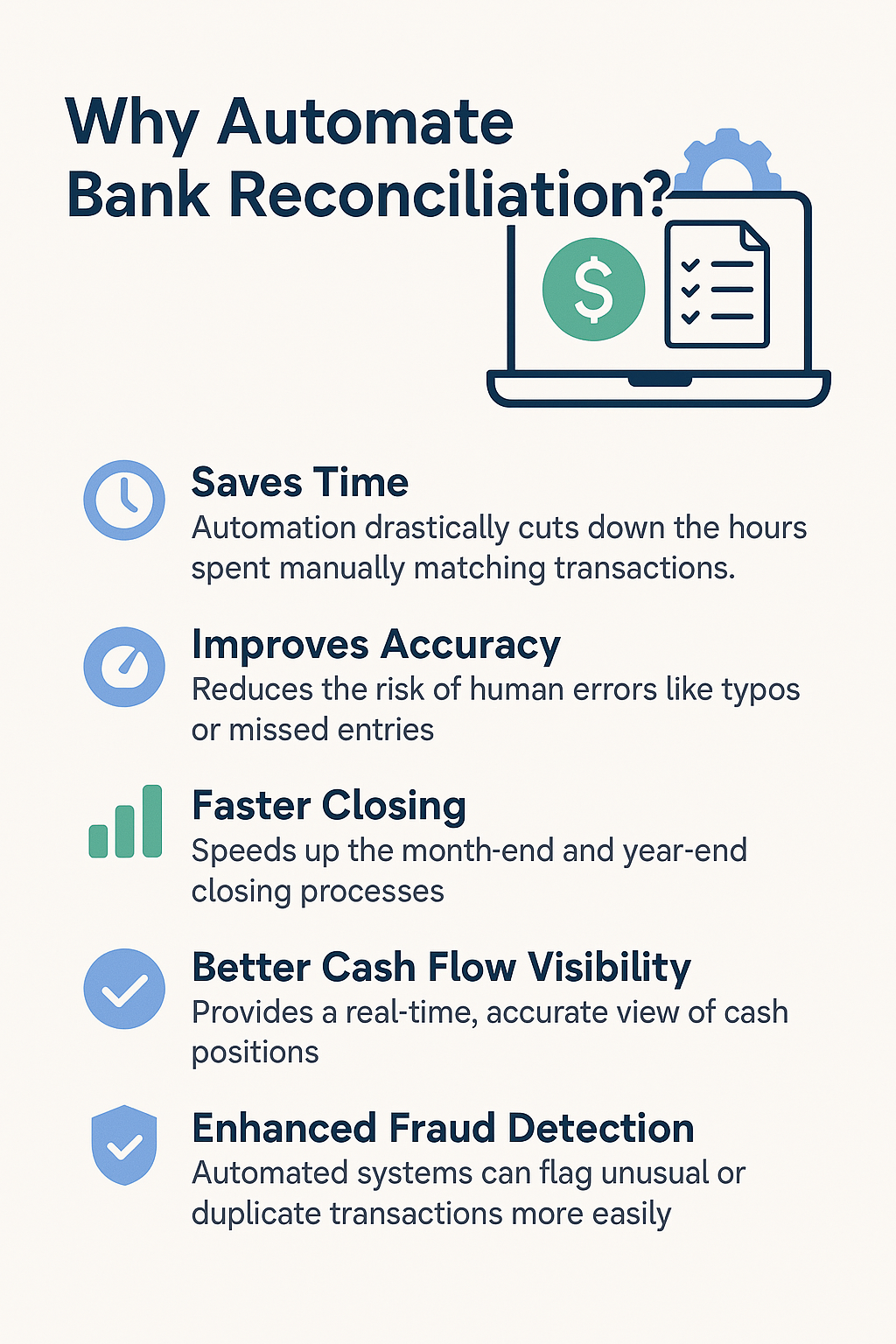
The Top 5 Benefits of Automated Bank Reconciliation
Manual bank reconciliation is time-consuming and prone to errors. Learn how automation streamlines this critical process...